
 Back to Blog

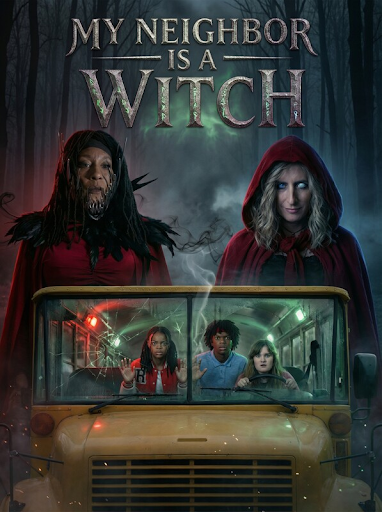
The most unsettling image in My Neighbor is a Witch is not a witch.
It’s a school bus.
A vehicle built on routine becomes a vessel of uncertainty, and that single reversal quietly shapes the film’s visual identity. Omar Reid understands that horror rarely begins in abandoned houses or haunted forests. It begins when ordinary places stop feeling ordinary.
Naila, a determined thirteen-year-old, isn’t introduced as a chosen hero. She’s simply a child who refuses to ignore what everyone else has learned to dismiss. As children continue to disappear from her neighborhood, suspicion settles on Aana, the neighborhood bus driver. The film could have rushed toward supernatural spectacle. Instead, it lingers in the uncomfortable space between doubt and belief, allowing the audience to inhabit the same uncertainty as its young protagonists.
That choice gives the cinematography an unusual purpose.
The camera doesn’t merely record events; it withholds certainty. Familiar streets feel narrower. Everyday corners seem capable of concealing impossible truths. Rather than announcing fear, the imagery invites it to grow gradually inside spaces that should have offered comfort. The result is a visual language that transforms an urban neighborhood into a place where every routine carries a faint sense of danger.
This is why the film’s cinematography deserves attention. Its strongest images aren’t the loudest ones. They reshape the emotional geography of ordinary life.
Omar Reid’s own journey lends another dimension to the work. Born in Kingston, Jamaica, later serving in the U.S. Air Force before building a career as a writer, actor, producer, and director, Reid approaches storytelling from multiple creative disciplines. That range is reflected here. The supernatural elements never exist in isolation; they remain grounded by characters whose fears feel recognizably human.
The title itself encourages assumption. One expects a story about discovering whether a witch exists. Yet the film seems more interested in exploring what communities do when fear settles next door. Rumor becomes evidence. Curiosity becomes courage. The unknown grows larger each time someone looks away.
Good horror often asks audiences to fear the darkness.
My Neighbor is a Witch suggests something more unsettling—that fear begins long before night falls, when the familiar quietly loses our trust.
Long after its supernatural mystery fades, the film leaves behind a lingering image: children looking at an everyday world that no longer promises to keep them safe. That feeling, more than any spell or apparition, is what gives the film its lasting power.


