
 Back to Blog

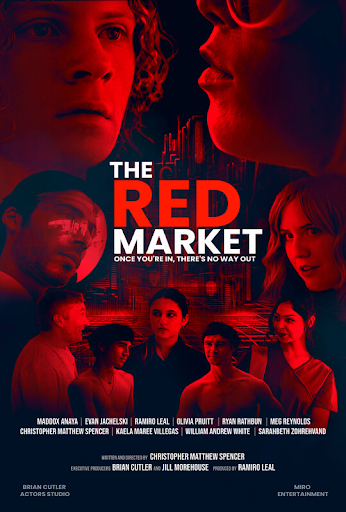
There is a moment, even before the first impossible decision is made, when The Red Market asks its audience to confront an unsettling possibility: what happens when the last thing a person owns is no longer their home, their savings, or their future but their own body?
Christopher Matthew Spencer doesn’t build his debut around monsters hiding in the dark. He builds it around a system that feels disturbingly rational. Debt becomes pressure. Pressure becomes negotiation. Negotiation becomes sacrifice. By the time Zephyr Sage considers selling pieces of himself through the Global Organ Donor Exchange, the audience is no longer asking whether they would make the same choice. They are asking how many desperate circumstances separate them from it.
That shift is the film’s greatest achievement.
The premise could easily have become sensational. Instead, Spencer treats the body less as a source of horror than as the final asset inside an unforgiving economy. Every transaction carries emotional weight because the film understands that value is never measured only in dollars. It is measured in dignity, agency, and the quiet erosion of choice.
Hyacinth, the manipulative loan shark, is equally compelling. The character functions less as a traditional villain than as the visible face of a system that profits whenever desperation becomes negotiable. That distinction gives the conflict an uncomfortable realism. The real antagonist is not merely one individual—it is a marketplace where survival itself acquires a price tag.
Spencer’s background brings an interesting perspective to this debut. A U.S. Navy veteran, actor, and performer recognized for his work in genre cinema, he approaches tension with the instincts of someone who understands performance from inside the frame. Here, those instincts are redirected toward moral suspense. The audience isn’t waiting to discover who survives; they are watching to see what survival ultimately costs.
The title itself deserves attention. The Red Market is more than a reference to illegal trade. It becomes a metaphor for every moment society quietly places a monetary value on something that should never be treated as a commodity. The film never lectures about that idea. It simply allows the consequences to unfold.
Strong debut features often announce a filmmaker’s technical ability. More memorable ones reveal the questions that continue to haunt them.
With The Red Market, Christopher Matthew Spencer suggests that the most unsettling stories are not those that imagine impossible futures, but those that exaggerate realities already taking shape around us.
Long after the credits, one question remains.
If everything can be bought, what is the first thing that should never have been for sale?


