
 Back to Blog

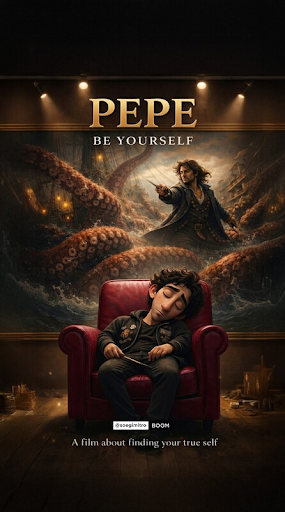
The image that lingers in PEPE – Be Yourself is not a triumphant one. It is a quiet one: a young painter asleep in a museum, surrounded by masterpieces, still uncertain that his own life deserves a place among them.
That single moment reveals what Soegimitro BOOM’s film is truly about.
Pepe’s journey isn’t simply from insecurity to confidence. It is a gradual release from the exhausting habit of measuring himself against everyone else. The commission to paint the celebrated boxer Rocco and his growing connection with Isabella are important, but neither defines him. They simply illuminate a truth he has been unable to see: authenticity cannot be borrowed.
That idea carries unexpected weight coming from a filmmaker whose career spans more than three decades in branding. Having spent years shaping public identity, Soegimitro BOOM now turns inward, asking a far more difficult question—what remains when performance ends?
The answer is quietly reflected in the film’s use of AI.
Rather than drawing attention to the technology, PEPE lets it disappear behind the story. The conversation shifts from what AI can generate to what only a human experience can express. That restraint is its greatest strength.
The museum itself becomes more than a setting. It is a space where celebrated lives confront an artist who believes he has none worth preserving. Every painting becomes another reflection of Pepe’s search for himself.
Perhaps the film’s most compelling idea is also its simplest: greatness is not discovered by becoming someone worthy of admiration, but by finding the courage to stop imitating others.
As AI continues to reshape filmmaking, PEPE – Be Yourself offers a timely reminder. Technology may help create images, but meaning still belongs to the storyteller.
And in the end, that is what stays with you—not the tool, but the truth.


