
 Back to Blog

Most documentaries begin with a promise.
They promise to uncover a hidden truth, investigate an injustice, or chronicle an extraordinary life. Within minutes, the audience understands what questions the film intends to answer.
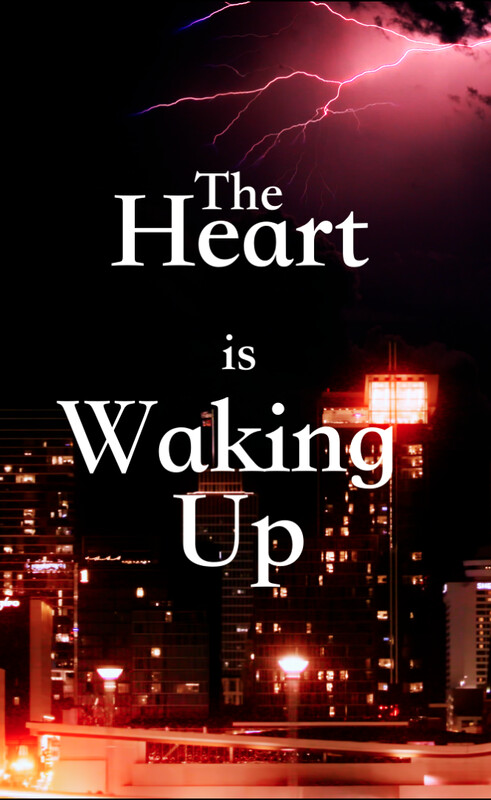
The Heart Is Waking Up makes a quieter decision.
It begins by refusing that promise altogether.
Ryan John Andrews’ first feature documentary does not hurry to explain its central figure, poet and singer-songwriter Jacob Milstein. Instead, it invites the audience to remain beside him, allowing performances, fragments of poetry, conversations, and the passing landscape between Nashville, Oklahoma, and Montana to accumulate into something far more elusive than biography. Rather than constructing a definitive portrait, the film accepts that a human being can never be fully translated into exposition.
That restraint becomes its defining artistic gesture.
The documentary belongs to a tradition of nonfiction cinema that values observation over interpretation. Andrews seems less interested in telling viewers what Jacob Milstein represents than in asking whether presence itself can become a cinematic language. Every performance feels less like an event staged for the camera than an act of listening, where music and silence negotiate equal space.
The effect is quietly disarming.
Music documentaries often rely on chronology. They chart careers, celebrate milestones, and organize memory into an accessible narrative. The Heart Is Waking Up travels another road. Time feels porous. Poems emerge without warning. Songs do not interrupt the story because they are the story. They function as emotional geography rather than entertainment, revealing interior landscapes that conventional interviews might never reach.
This refusal to separate art from daily existence gives the film an unusual rhythm.
Life unfolds in what could easily be dismissed as ordinary moments: a conversation, a rehearsal, the changing light over an open road, family members occupying the same emotional space without the need for dramatic declaration. Yet these moments gradually acquire unexpected gravity. Andrews appears to trust that meaning grows through accumulation rather than explanation, allowing viewers to assemble the emotional architecture themselves.
That trust extends to the film’s visual language.
The roads connecting Tennessee, Oklahoma, and Montana become more than physical locations. They suggest movement without destination, a fitting metaphor for an artist whose creative life seems defined less by arrival than by continual searching. Landscape and memory begin reflecting one another until geography itself becomes a participant in the narrative.
Jacob Milstein’s poetry and music occupy a similarly fluid role.
Neither serves as commentary upon the documentary. Neither functions as background atmosphere. Instead, they become another way of seeing. The audience is never asked to admire artistic performance from a comfortable distance. They are asked to inhabit the fragile space where artistic creation and ordinary living become impossible to separate.
For a first-time filmmaker, Ryan John Andrews demonstrates remarkable confidence in silence.
Coming from a lumberjack family in rural northwest Montana, Andrews approaches documentary filmmaking without the visible anxiety of trying to impress through stylistic excess. His camera remains patient. It understands that revelation often arrives after expectation has disappeared. That patience allows vulnerability to emerge naturally, particularly as the film navigates the delicate territory between spiritual yearning and emotional exhaustion without reducing either to easy symbolism.
Perhaps this perspective explains why the documentary never feels interested in celebrating the mythology of the artist.
Jacob Milstein is not presented as a heroic creative figure standing apart from ordinary life. He exists within family, friendship, uncertainty, faith, and doubt. The title itself, The Heart Is Waking Up, suggests awakening rather than achievement. It proposes that artistic practice may be less about becoming extraordinary than remaining awake to experiences many people quietly overlook.
In an era when documentaries increasingly compete for attention through urgency, revelation, and spectacle, The Heart Is Waking Up moves deliberately in the opposite direction. It reminds us that cinema can still create profound experiences simply by observing another person’s search for meaning without attempting to solve it.
That may be the film’s most lasting accomplishment.
It understands that some lives are not waiting to be explained.
They are waiting to be heard.


