
 Back to Blog

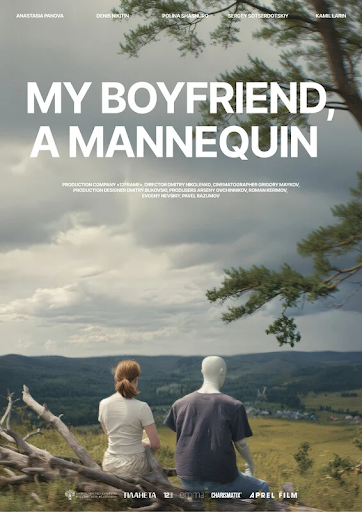
The film begins with a contradiction.
A young woman sees someone who, to everyone else, does not exist. The natural instinct is to question her perception. The film quietly asks a more unsettling question instead. What if reality is not defined by what the majority can see?
That shift changes everything.
The missing son of a shopping mall owner returns, not through science or memory, but through an enchanted mask. Yet resurrection is only the beginning of the story. Radmir’s greatest obstacle is not ancient magic. It is invisible. He can walk beside people, speak to them, even exist among them, and still remain unheard.
There is something deeply human in that idea.
Fantasy often relies on magical objects to transport audiences into another world. Here, the magic exposes something painfully familiar about this one. Every person has experienced moments of feeling unseen, misunderstood, or dismissed despite standing in plain sight. The supernatural simply gives that emotional truth a physical form.
Vika becomes the emotional anchor because she never doubts what she has witnessed. Her faith is not blind optimism. It is quiet conviction. She chooses belief before proof, and that decision transforms the story from a fantasy adventure into something unexpectedly intimate.
The romance grows naturally from this foundation. It is not built on grand declarations but on recognition. Before Vika can love Radmir, she must first acknowledge his existence. The film gently suggests that perhaps this is where every meaningful relationship begins. To truly see another person is a rare kind of magic in itself.
Director Dmitry Nikolenko approaches the material with notable restraint. Despite its supernatural premise, the film never loses sight of its emotional center. The fantasy elements expand the imagination without overwhelming the characters, allowing wonder and vulnerability to occupy the same frame.
The visual language deserves particular attention. The contrast between the visible and the invisible shapes more than the narrative. It shapes the cinematography itself, creating a world where absence often carries greater dramatic weight than presence. Equally impressive is the editing, which preserves the delicate rhythm between mystery, romance, and fantasy without allowing one to overpower the others.
The film quietly proposes an idea that lingers beyond its final scene.
Perhaps the greatest curse is not disappearing.
Perhaps it exists in a world that has forgotten how to see.
Royal Feather Award.
Honored with Best Debut Director, Best Actress, Best Cinematography Feature, Best Editing Feature, and Best Romance Feature.
USA International Film Awards.


